

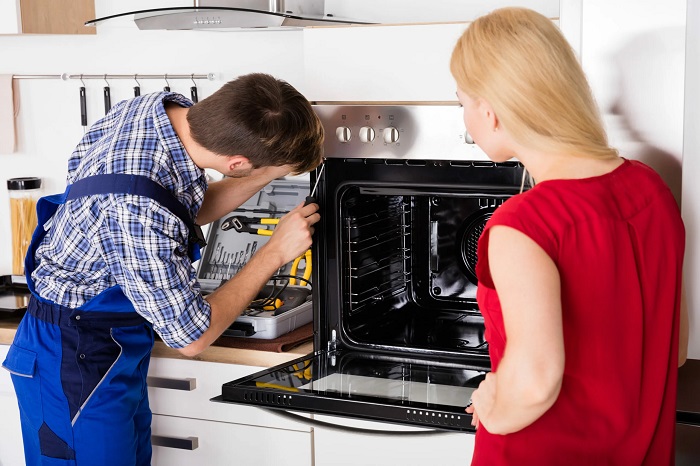
An oven that bakes unevenly is one of the most frequent complaints from homeowners. Cookies burn on one side while the other remains undercooked. The problem can come from electrical faults, sensor errors, or even airflow issues inside the chamber. Below are real oven repair cases showing how technicians solve this type of malfunction step by step.
Case 1: Burned-Out Bake Element
A customer reported that the top of the food was cooking too fast while the bottom stayed raw. The technician checked the heating elements and immediately noticed the lower bake element had a visible break. Using a multimeter, they confirmed zero continuity. The element was replaced with an identical high-temperature version, secured with stainless screws, and tested on both bake and convection modes. The oven reached and held 350°F evenly within 12 minutes.
Case 2: Faulty Temperature Sensor
Another call involved an oven that appeared to heat but consistently undercooked meals. The internal sensor was reading incorrect resistance, sending the wrong temperature to the control board. The technician accessed the back panel, removed the old probe, and installed a new one rated for the model. After calibration, the digital display matched actual cavity temperature within 5°F — enough for accurate cooking again.
Case 3: Convection Fan Malfunction
In a convection oven, a motorized fan circulates hot air to ensure even baking. In this case, the fan motor was running intermittently. During inspection, the motor bearings were noisy and slightly seized. Replacing the motor restored consistent airflow, and the temperature difference between corners dropped from 40°F to less than 10°F. The homeowner immediately noticed improved browning on both sides of baked goods.
Case 4: Control Board Calibration Error
Electronic ovens depend on a control board to manage temperature cycles. In one repair, the oven reached target heat but cycled off too soon, causing fluctuations. Diagnostic mode showed that the control board calibration had drifted after a power surge. The technician reset the parameters and updated the firmware. After recalibration, the oven maintained stable operation through multiple test bakes.
Case 5: Door Seal Damage
Uneven heating can also occur when the oven door does not close tightly. In a local service case, heat escaped through a worn gasket on the upper right corner. The rubber had hardened from years of use. After installing a new seal, the technician verified tight closure and checked temperature stability — no more cold zones near the door.
Case 6: Sensor Wiring and Connectors
In another repair, an intermittent issue appeared only after preheating. The root cause turned out to be an oxidized sensor connector. High heat caused resistance changes that led to irregular readings. Cleaning the connector and applying heat-resistant grease solved the problem permanently.
Preventive Advice
Most uneven-heating problems develop slowly. Checking the bake and broil elements visually once in a while, keeping the oven clean, and verifying door seal elasticity help detect issues early. Temperature sensors can also be tested at home with a simple multimeter if the oven starts acting unpredictably.
Even heating is the result of good electrical contact, accurate temperature sensing, and proper airflow. When one part fails, the balance is lost — but with systematic diagnosis, the fix is often quick. Once repaired, an oven should heat evenly, maintain consistent cycles, and make cooking predictable again.